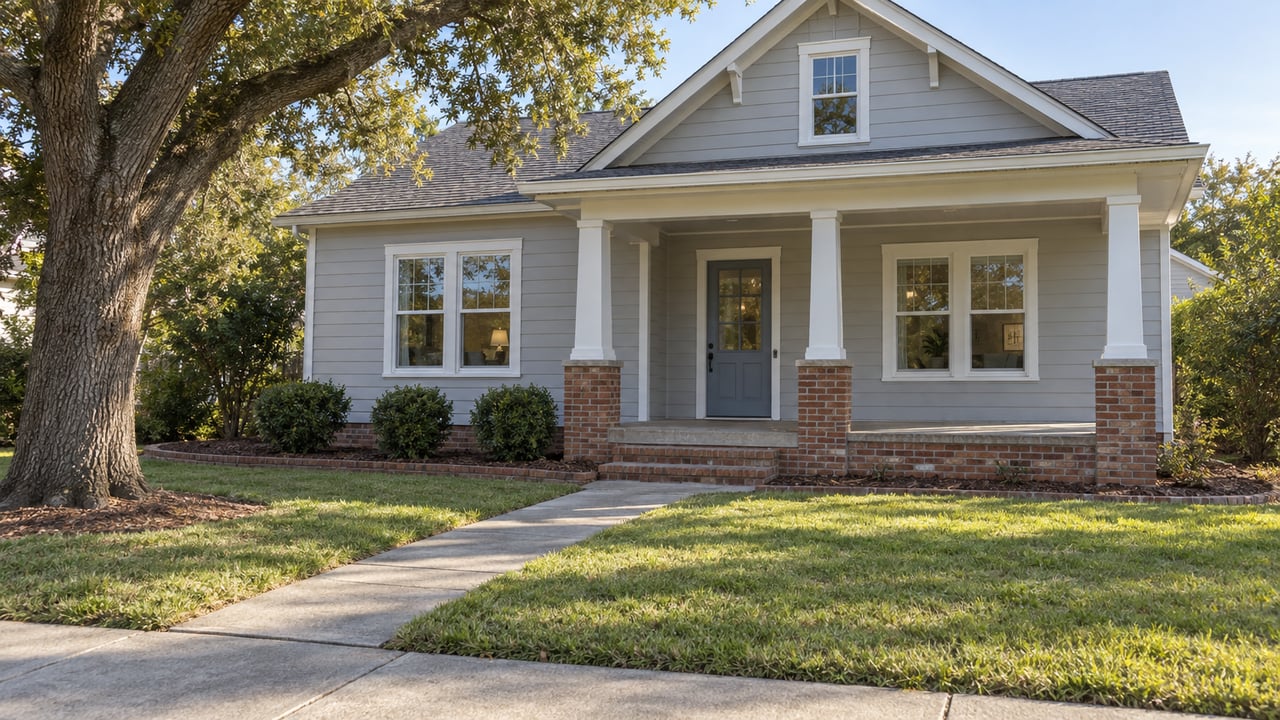
In Leland, the Gate Decides Who Pays for the Road
October 29, 2026
October 29, 2026
According to Port City Daily, only four members of the Brunswick County Planning Board attended its Oct. 12 meeting, and they voted unanimously to approve South Cape, an 829-home community off River Road in Winnabow. South Cape took up about half the meeting. One of the most contested points was the lack of an open connection to Brunswick Forest, which the plan reaches only through three gates along South Cape's western edge.
Those gates will stay closed except for emergency vehicles. In Leland and the unincorporated land around it, a gate decides more than who can drive in. It decides who pays for the pavement behind it, and where everyone else ends up driving. Anyone comparing communities in this part of Brunswick County is choosing a road arrangement along with a floor plan, whether the listing says so or not.
South Cape plans 519 single-family homes and 310 townhomes on 348 acres. The site borders both Mallory Creek and Brunswick Forest. The site plan lists three access roads. The community opens onto River Road, also known as N.C. 133, on its east side, and its three western connections to Brunswick Forest are gated for emergency use.
Here is where each party stood on opening one of those gates:
The board sided with the applicant. Staff noted that a project of more than 120 units needs three access points, and the county attorney's office confirmed that requiring a fourth, open connection was up to the board. The board chose not to require it.
On the surface, it's odd that the developer of an established gated community would push for an opening into its neighbor. It makes sense once you look at who pays for wear on a private street.
South Cape's own traffic analysis estimated that about 65% of Brunswick Forest would use the connection if it opened. That works out to roughly 6,700 vehicles a day. South Cape's attorney argued that the added maintenance from that load would fall on the developer, while Leland said it was willing to maintain the connector. One board alternate said during the debate that a fully private neighborhood would lose its purpose if outside drivers cut through it on the way to the other side.
Road standards add a second cost. Under North Carolina Department of Transportation standards, a collector street must be 34 feet wide and a local street 26 feet, and a collector needs more stormwater management. South Cape's team said the wider road would take up buildable land and could force them to drop homes near the entrance.
So the gate does two jobs. It keeps a future homeowners association's paving bill tied to the people who actually live there, and it keeps lots on the site plan. Those are real advantages for South Cape's future owners. The cost of that arrangement shows up on River Road.
South Cape is expected to generate 7,291 vehicle trips each weekday. With the western gates reserved for emergencies, the community's everyday access is from River Road, so that is where those trips land. It's a two-lane road of about 47 miles between Southport and Leland, and NCDOT counts more than 6,000 travelers on it each day.
Speakers at the hearing also brought up the road's history. After Potential Tropical Cyclone 8 in 2024, part of River Road caved in, and NCDOT kept it closed for almost a year. Traffic between Belville, Leland, Wilmington and Southport detoured to N.C. 87 and U.S. 17.
This is where the decision reaches people outside South Cape. A buyer looking at Brunswick Forest Phase 4, Mallory Creek or a lot along River Road now knows something the listing photos won't show. The neighboring 829 homes will take their daily trips on the same two-lane road, not through the community next door.
Inside town limits, Leland has three tiers of roads. In a 2018 interview with Port City Daily, the town's economic development director said NCDOT owns and manages Village Road and U.S. 17. Most other public roads in town are owned and maintained by the town, and private roads may be owned and maintained by an HOA or a private property owner. He used Waterford as the example. The roads outside its gates were town roads, and the roads beyond the gates were private. That was a snapshot from 2018, not a current street inventory. The split it describes still applies.
A private street can become public. In August 2025, Mill Branch at Leland Homeowners Association offered five streets to the town: Sunrise Creek Drive, Lovely Crossing, Pink Moon Lane, Tender Heart Circle and Starry Sky Road. The dedication covered the asphalt, sidewalks and stormwater drainage. Town staff recommended that council adopt Resolution R-25-059 to accept them. The staff memo set out the trade plainly. The town would take on maintenance and repair, and it would also receive annual funds from the state's Powell Bill program tied to those streets.
That memo shows the arrangement behind the South Cape debate. A town-maintained street carries Powell Bill eligibility along with its repair costs. For an HOA, giving a street to the town hands off the repair bill along with control over who drives on it.
Under G.S. 136-102.6, the developer and seller must prepare and sign a separate subdivision streets disclosure statement before entering any agreement or conveyance with a prospective buyer, and the buyer signs an acknowledgment of receipt. The statement has to cover these points:
The statute applies to all subdivisions outside municipal limits. Inside a town, it covers a narrower set of streets tied to the state highway system's future street plan. Which side of a town line a community sits on therefore affects how much of the statute applies to it. For public subdivision streets, NCDOT publishes its road-addition petition forms and subdivision manuals on its Secondary Roads and Subdivisions page.
This is general information, not legal advice. A real estate attorney can tell you how the disclosure rules apply to a specific lot or contract.
The body that voted on South Cape is losing that authority. House Bill 1222 passed 114-0 and was ratified in July 2026. For applications submitted after July 2, Brunswick County commissioners make the final call to approve or deny projects. The planning board now only makes recommendations, according to WECT. As of Oct. 5, the planning board still had 10 earlier-filed applications to decide under its old authority.
The same law requires traffic impact analyses for preliminary subdivision plats of 25 or more lots, major site plans, planned developments and special use permits. On Oct. 5, commissioners voted to ask legislators to drop the special use permit requirement. The Port City Daily report on that vote says the requirements for subdivisions and planned developments would stay. The next large project near Leland will go before elected commissioners with a traffic study, and the same argument over gates and connections will happen in front of them.
Are Brunswick Forest's streets public or private? Port City Daily's coverage of the vote doesn't settle that question for the community as a whole, and street status can vary from section to section, as Waterford shows. The subdivision streets disclosure statement and the recorded plat for a specific lot are the documents that answer it.
Can the South Cape gates open later? As approved on Oct. 12, the three western connections are gated for emergency use only. Changing that would mean revisiting the approved plan.
What does a town-accepted street change for an HOA? In the Mill Branch example, staff recommended that the town accept maintenance and repair of the accepted asphalt, sidewalks and drainage, and staff noted the town would receive annual Powell Bill funds tied to those streets.
If you're weighing a gated Leland community against one with town streets, the team at Better Beach Sales can help you pull the plat and streets disclosure for each home on your list and compare who maintains what before you make an offer. Schedule a consultation and experience Oak Island with us.
Stay up to date on the latest real estate trends.
Imagine a place where work and play seamlessly blend into one fulfilling lifestyle. Our approach at Better Beach Sales goes beyond finding you the perfect home—it’s about building a community that thrives on collaboration and the natural beauty of Oak Island. Together, we can create opportunities, share success, and truly enjoy all that our coastal haven has to offer.