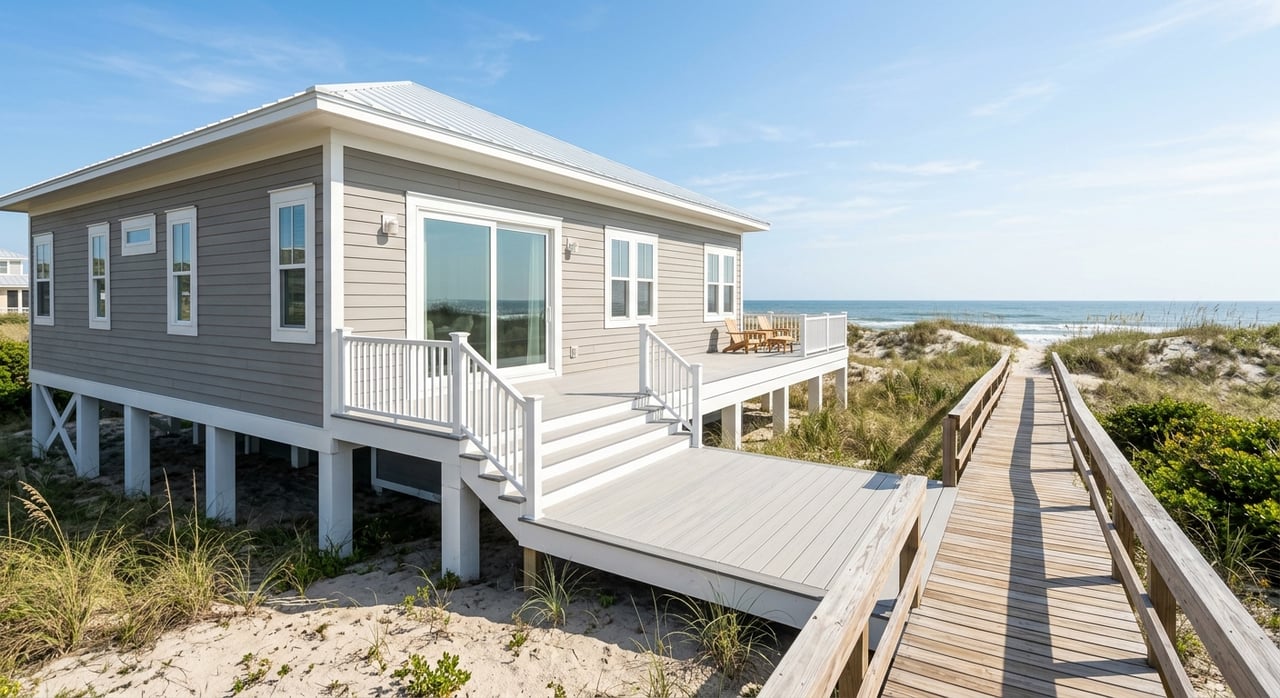
Oak Island Oceanfront Home Pricing Strategies That Work
May 28, 2026
May 28, 2026
If you price an Oak Island oceanfront home like a generic coastal listing, you can leave money on the table or watch the property sit longer than it should. That is frustrating when you know your home offers something special, whether it is direct beachfront, a deeper lot, or proven rental appeal. The good news is that smart pricing is not guesswork here. It is a local strategy built around the details buyers actually pay for. Let’s dive in.
Oak Island is not a market where one townwide average tells the whole story. As of April 30, 2026, Zillow reported 267 homes for sale, 70 new listings, a median sale price of $598,833, a median list price of $658,700, and a median sale-to-list ratio of 0.975. Realtor.com also described Oak Island as a balanced market in March 2026, with 60 median days on market and a 98% sale-to-list ratio.
That matters because buyers are still active, but they are not ignoring overpricing. In a balanced market like this, a well-positioned oceanfront or second-row home can attract strong interest near asking price. An aggressive list price, on the other hand, can stretch your days on market and lead to reductions that weaken your negotiating position.
On Oak Island, oceanfront, second-row, and near-beach homes often act like separate submarkets. That means you should not compare your home to every beach property on the island. You need recent sales with a similar row, similar frontage, and similar real-world use.
Recent sales show how wide the range can be. A home at 1011 W Beach Dr sold for $940,000 after 57 days on market, while 1025 W Beach Dr sold for $1,000,000. Another oceanfront property at 2221 E Beach Dr sold for $1,450,000 after 201 days and 2.68% below asking, and a furnished second-row home at 2602 E Beach Dr sold for $950,000.
The lesson is simple: row matters, but it is not the whole story. Buyers also weigh size, condition, lot usability, view corridor, and how easy the home feels to enjoy from day one.
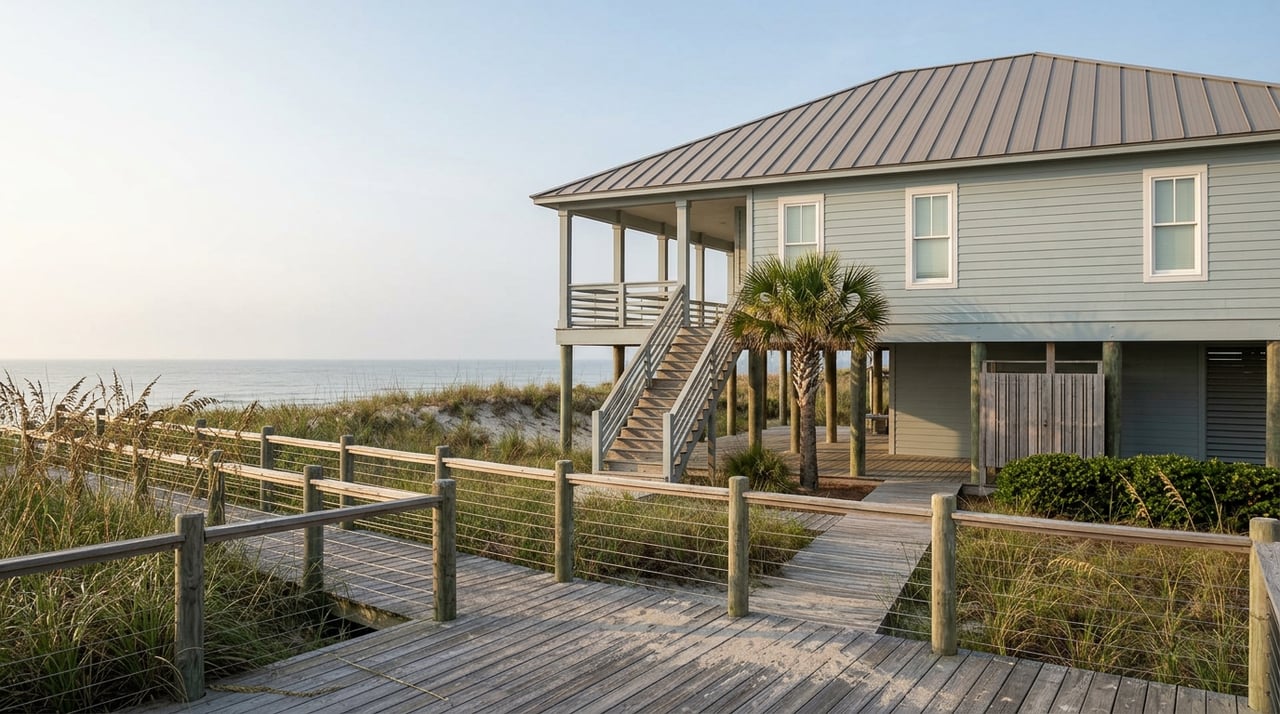
Direct ocean frontage usually commands a premium, but even among oceanfront homes, value can vary widely. A wide-open view, stronger frontage, and fewer visual obstructions can support a higher price point. If your home has an especially clean sightline to the water, that should be part of the pricing story.
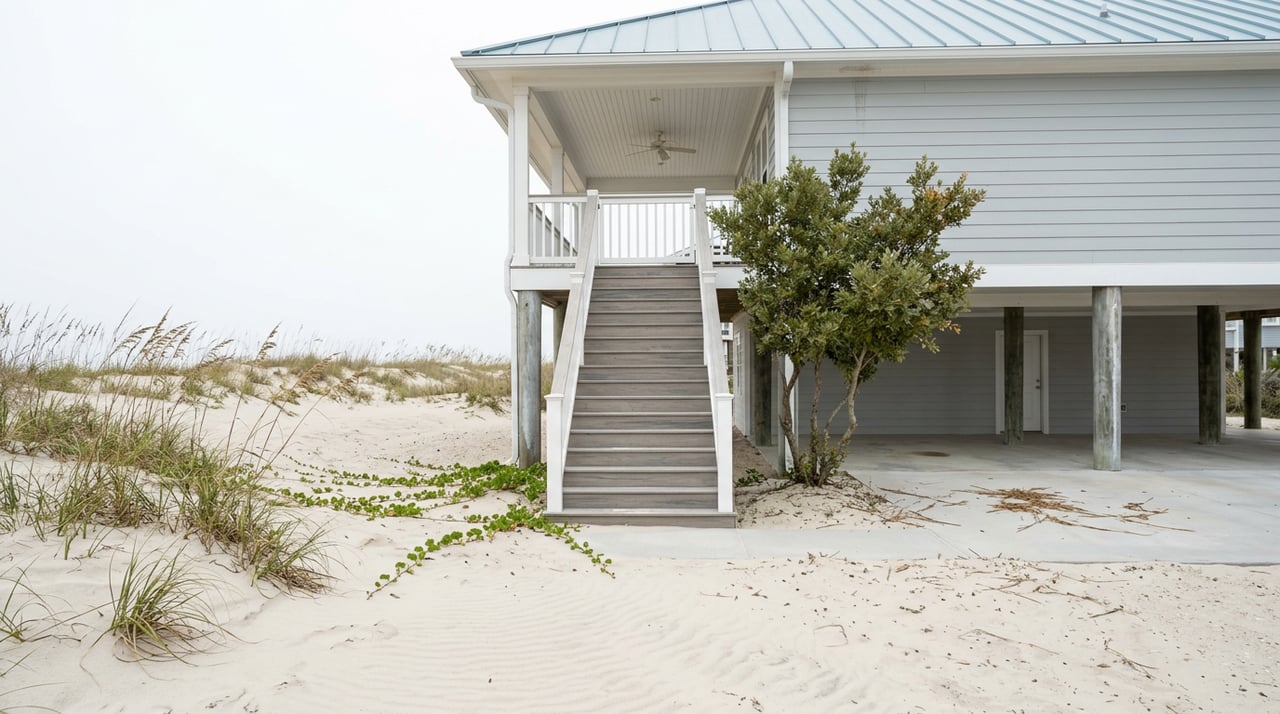
Second-row homes can also perform well when they offer easy beach access and a strong view experience. In Oak Island, where beach lifestyle drives demand, convenience and visual appeal often work together.
A deep lot can be more valuable than many sellers realize. The sale at 2221 E Beach Dr was marketed with extra lot depth, room for a pool and gazebo, and expansion potential on both sides of the home. That kind of flexibility can influence how a buyer sees long-term value.
This is especially important on oceanfront lots because the buildable area is not just about total lot size. North Carolina DEQ notes that oceanfront setbacks are tied to long-term shoreline change rates and measured landward from stable vegetation or the primary dune. In practical terms, buyers care about the actual usable envelope, not just the dimensions on paper.
Condition matters in every market, but it carries extra weight in a coastal second-home and vacation-home market. Buyers often want a home they can enjoy right away without taking on repairs, updates, or furnishing delays. If your property feels move-in ready, that can help justify a stronger list price.
The second-row sale at 2602 E Beach Dr is a good example. It was marketed as furnished, which reduced friction for buyers and helped position it as a ready-to-use beach property. For many Oak Island buyers, convenience has real value.
Vacation rental homes play a major role in Oak Island’s beachfront market. If your home has rental income history, organized records can strengthen your pricing strategy far more than general claims about earning potential. Buyers tend to trust what they can verify.
That means preparing month-by-month occupancy records, receipts, expense summaries, and tax filings before you go live. The Town of Oak Island requires monthly accommodations-tax reporting for rental units, even in months with no rental income. Clean documentation helps support your asking price and gives investor-minded buyers more confidence.
Oceanfront buyers are not just pricing the view. They are also pricing the risk profile that comes with it. Oak Island states that oceanfront areas are prone to flooding, and standard homeowners insurance does not usually cover flood damage.
The town also provides flood map resources that show flood risk, potential hazard impacts, insurance implications, and mitigation opportunities. North Carolina DEQ adds that shoreline movement is a normal part of coastal life, so buyers often factor flood exposure, erosion risk, and future use into what they are willing to pay. If your home has features that improve buyer confidence, those should be reflected clearly and factually in the marketing and pricing conversation.
Your first step is to build a comp set that mirrors your home as closely as possible. Focus on recent sold properties with the same row, similar beach orientation, similar lot utility, and a comparable condition level. A broad town average can be useful background, but it should not drive the pricing decision for a beachfront home.
In Oak Island, recent sold examples show why this matters. A narrow pricing lens helps you avoid both underpricing a premium asset and overreaching because another home sold high under very different conditions.
Once you have the right comps, the next step is adjusting for the features buyers care about most. Useful positive adjustments may include:
You should also make honest downward adjustments where needed. These may include deferred maintenance, higher flood exposure, a less functional layout, or a site that limits future improvements.
Current Oak Island data suggests buyers are still willing to transact close to asking when the list price is grounded in local evidence. Zillow’s 0.975 sale-to-list ratio and Realtor.com’s 98% figure both point in that direction. In other words, the market is rewarding precision.
That does not mean pricing high and hoping buyers meet you halfway. It means choosing a number that feels defensible from the start. Overpricing can create drag, while a sharp, well-supported asking price can protect your leverage and shorten time on market.
Your pricing decision should connect to your net, not just your list number. Oak Island’s current town property tax rate is $0.20 per $100 of value, and Brunswick County’s FY 2025-2026 ad valorem rate is 0.3420 per $100. The town also lists a sewer district fee of $601.78.
Together, that puts combined town and county property taxes at about $5.42 per $1,000 of assessed value, or roughly $5,420 on a $1 million assessment before the sewer fee and any special assessments. If your home lingers because it was priced too ambitiously, those ongoing costs can quietly reduce your bottom line.
Oak Island has about 10 miles of beachfront, 65 public beach access locations, and nearly 1,500 parking spaces. That access network plays a real role in how buyers and guests experience the island. For second-row and near-beach homes, convenience to access points can support stronger demand.
It also matters for rental-oriented buyers and second-home owners who think about guest usability. Easy beach access can make a property feel more practical, more enjoyable, and more marketable.
The strongest pricing strategy for an Oak Island oceanfront home is not based on optimism alone. It is based on local comps plus local modifiers: row, view, access, lot depth, condition, rental history, and flood or erosion considerations. When those pieces line up, buyers will often pay close to asking.
That is where local experience makes a difference. In a market as nuanced as Oak Island, small pricing decisions can have a big effect on your final result. If you want help building a pricing strategy around what today’s buyers are actually responding to, connect with Better Beach Sales for a tailored, data-driven consultation.
Stay up to date on the latest real estate trends.
Imagine a place where work and play seamlessly blend into one fulfilling lifestyle. Our approach at Better Beach Sales goes beyond finding you the perfect home—it’s about building a community that thrives on collaboration and the natural beauty of Oak Island. Together, we can create opportunities, share success, and truly enjoy all that our coastal haven has to offer.