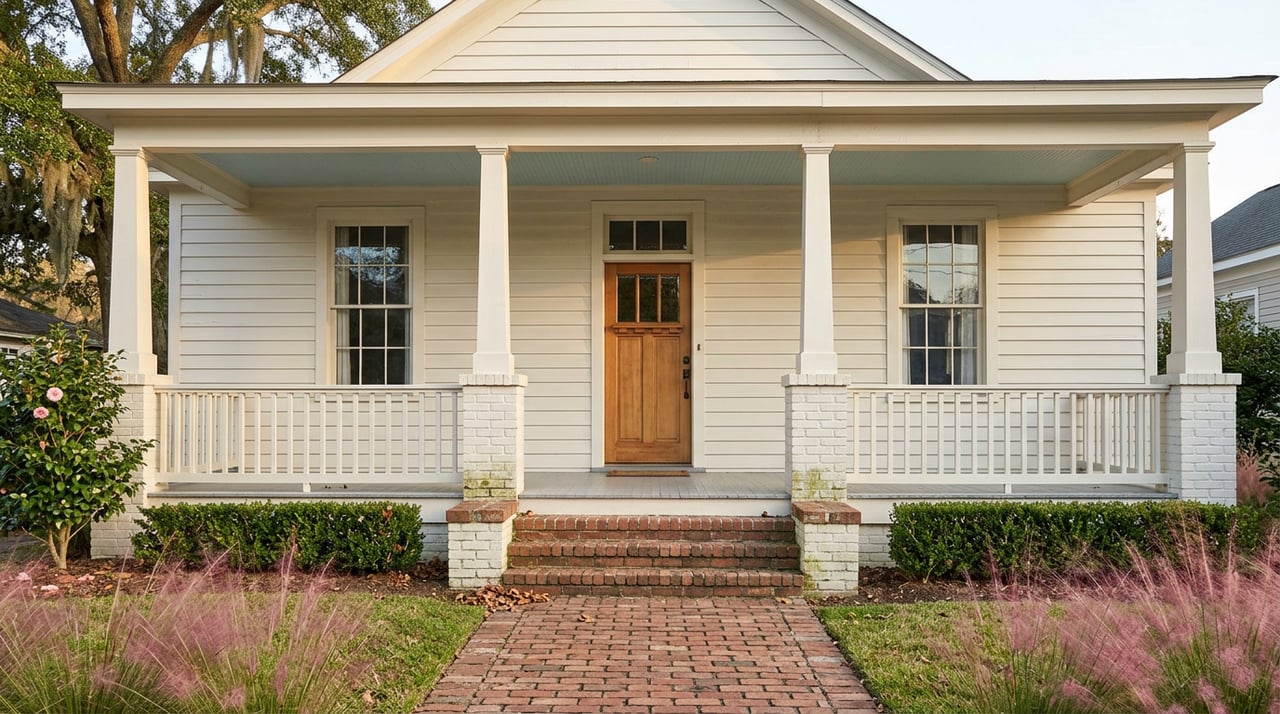
Southport Historic District Home Renovation Rules: What Has Changed
August 20, 2026
August 20, 2026
"Moving forward the historic preservation will be a voluntary advisory committee. It will not be a quasi-judicial board." Mayor Joe Pat Hatem said that at a Southport Board of Aldermen meeting in June, according to WWAY, and the room applauded. A few weeks later, the state legislature resolved the question through state legislation.
If you're buying, selling, or renovating a home inside Southport's historic downtown right now, the rulebook you thought you were dealing with doesn't exist anymore. Here's what happened, what's still true, and what's genuinely up in the air as you sit down at the closing table this fall.
According to WECT, on July 2, 2026, the North Carolina General Assembly ratified Senate Bill 876, a wide-ranging local laws measure signed by Senate President Rachel Hunt and House Speaker Destin Hall. Buried in Part XIII of that bill: the Southport Historic Preservation Commission is abolished, and the city is barred from creating a new historic district or expanding the one it already had.
That commission is the body that, until this summer, issued Certificates of Appropriateness. Minor work could clear staff review in one to three business days. For major work, meaning changes to materials, additions, or anything that altered a building's historic character, state statute gave the commission up to 180 days to rule, according to Port City Daily.
As of mid-August, that entire layer of review is gone. Not paused. Not under revision. It was eliminated by state legislation.
A short timeline helps make sense of how fast this moved:
This wasn't a quiet policy tweak. The proposed overlay drew months of public pushback from homeowners who felt the design standards functioned like an HOA they never signed up for. Bonner Herring, whose family's home on one of the historic downtown streets dates to 1892, said at a public meeting, as reported by WWAY: "My family's house here was built in 1892." His point, and the point echoed by other residents like Mimi Gregory, was that families who had maintained these properties for generations without government sign-off didn't see why that should change now.
Alderman Robert Carroll has discussed this change alongside other state actions affecting Southport land-use decisions. He's noted that the state eliminated Southport's extraterritorial jurisdiction in 2024, transferring roughly 2,000 acres to Brunswick County, and in 2025 allowed eleven properties in the Heron Circle and Oakwood Glen neighborhoods to deannex from the city, reducing its tax base. The historic district change is the third time in three years the state has acted on a Southport land-use matter.
If you've been eyeing a home on one of Southport's historic streets and budgeting for a renovation timeline that assumed a COA review, that specific bottleneck no longer applies. A project that would have needed major-work approval from the commission can currently move through standard city permitting alone, with no design-board sign-off layered on top.
That said, don't assume your paperwork is current. If a purchase contract, due-diligence checklist, or contributing-property disclosure you're reviewing references "compliance with Southport Historic Preservation Commission design standards" or a pending Certificate of Appropriateness, that language now points to a body with no authority to act on it. Have your closing attorney or title company confirm what's actually required before you rely on boilerplate that predates July 2026.
It's also worth knowing the story isn't finished. According to State Port Pilot, Alderman Karen Mosteller has proposed a Historic Preservation Appearance Commission with no quasi-judicial authority, meaning it could offer feedback but couldn't require anything. As of early August, aldermen hadn't voted on it. Anyone closing on a downtown property this fall could see a new advisory body stand up within months, even if it can't compel changes the way the old commission could.
If part of your pitch to buyers has been that a fully vetted design-review system protects the character of the block and discourages an incompatible remodel next door, that specific protection isn't currently in force. It's worth being straightforward with buyers: character in downtown Southport now rests on community norms, whatever deed restrictions might apply to a given parcel, and ordinary zoning, not a mandatory design board with enforcement power.
Southport's now-abolished local historic district and the National Register are two separate programs administered at different levels of government, with different requirements. The City of Southport says owners of contributing properties in the National Register Historic District may be eligible to apply for federal and state tax credits.
As of this writing, two things remain open. First, whether Southport formally adopts the voluntary Appearance Commission Alderman Mosteller proposed, and if so, what its practical role looks like day to day. Second, the administrative housekeeping of repealing the city's own HPC ordinance to match state law, which staff have framed as a formality rather than a substantive change. Neither of these affects whether you need a standard building permit for exterior work in Southport. That baseline requirement, tied to North Carolina's building code and the city's general zoning, hasn't moved. What's gone is the additional design-review layer that used to sit on top of it.
For context on where prices sit right now: the median single-family home price in Southport was just under $500,000 as of July 2026, though homes on the historic downtown streets, particularly ones with documented restoration work, tend to sell well above that citywide figure. That premium was never really about the Certificate of Appropriateness process itself. It's about lot size, proximity to the Cape Fear River waterfront, and the quality of past renovation work, none of which this legislative change alters.
Do I still need a permit to renovate a historic downtown Southport home? Yes. Standard city permitting and the North Carolina building code still apply. What disappeared is the added Certificate of Appropriateness review specific to the local historic district.
Are Southport's local historic district and the National Register the same designation? No. Local historic district designation and National Register listing are separate programs with separate requirements.
Is a replacement design-review body coming? Possibly, but nothing is finalized. A voluntary Historic Preservation Appearance Commission without approval authority has been proposed and discussed, but as of early August it hadn't been voted on. Check current status before you finalize renovation plans or closing paperwork.
If you're weighing a purchase, sale, or renovation project in one of Southport's historic streets, this is exactly the kind of on-the-ground detail that changes how a deal should be structured this fall. Schedule a consultation with Better Beach Sales before you write an offer or list your home, so you're working from what's actually true right now, not from a rulebook that no longer applies.
This article is general information, not legal, tax or financial advice. Consult a qualified professional about your situation.
Stay up to date on the latest real estate trends.

Imagine a place where work and play seamlessly blend into one fulfilling lifestyle. Our approach at Better Beach Sales goes beyond finding you the perfect home—it’s about building a community that thrives on collaboration and the natural beauty of Oak Island. Together, we can create opportunities, share success, and truly enjoy all that our coastal haven has to offer.