How Beach Nourishment Can Change Oak Island's Oceanfront Building Setbacks
September 10, 2026
September 10, 2026
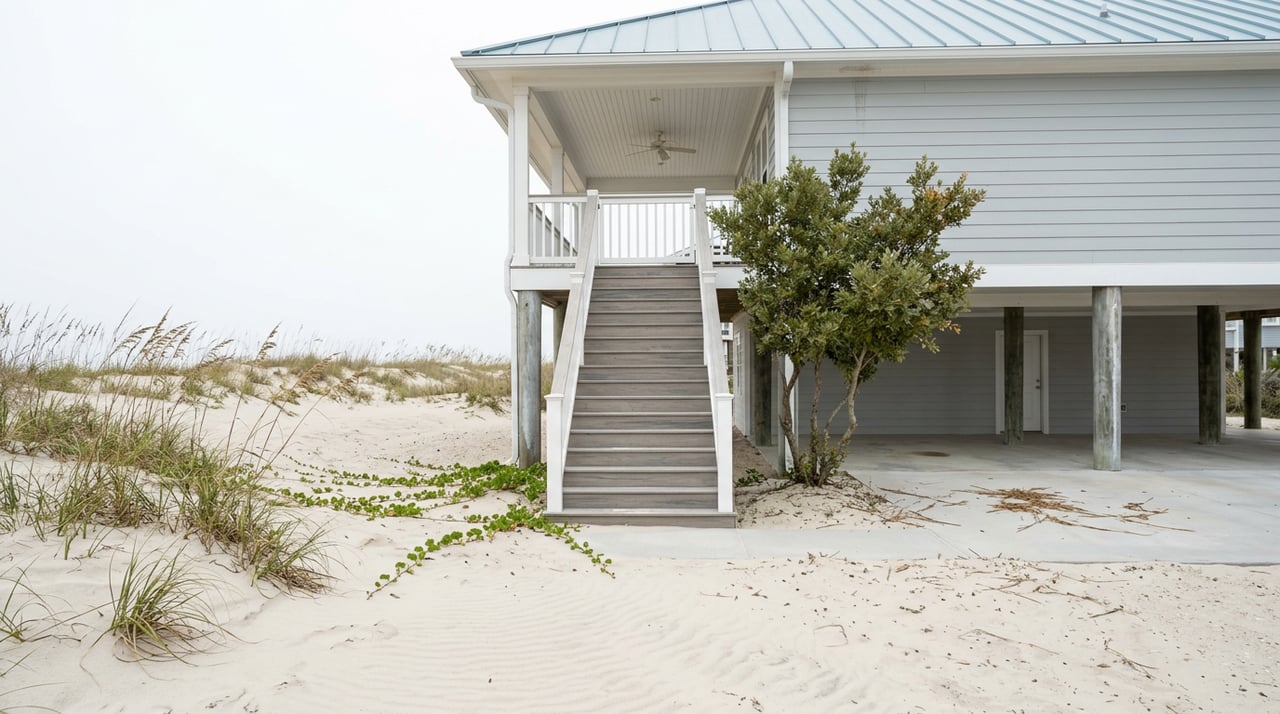
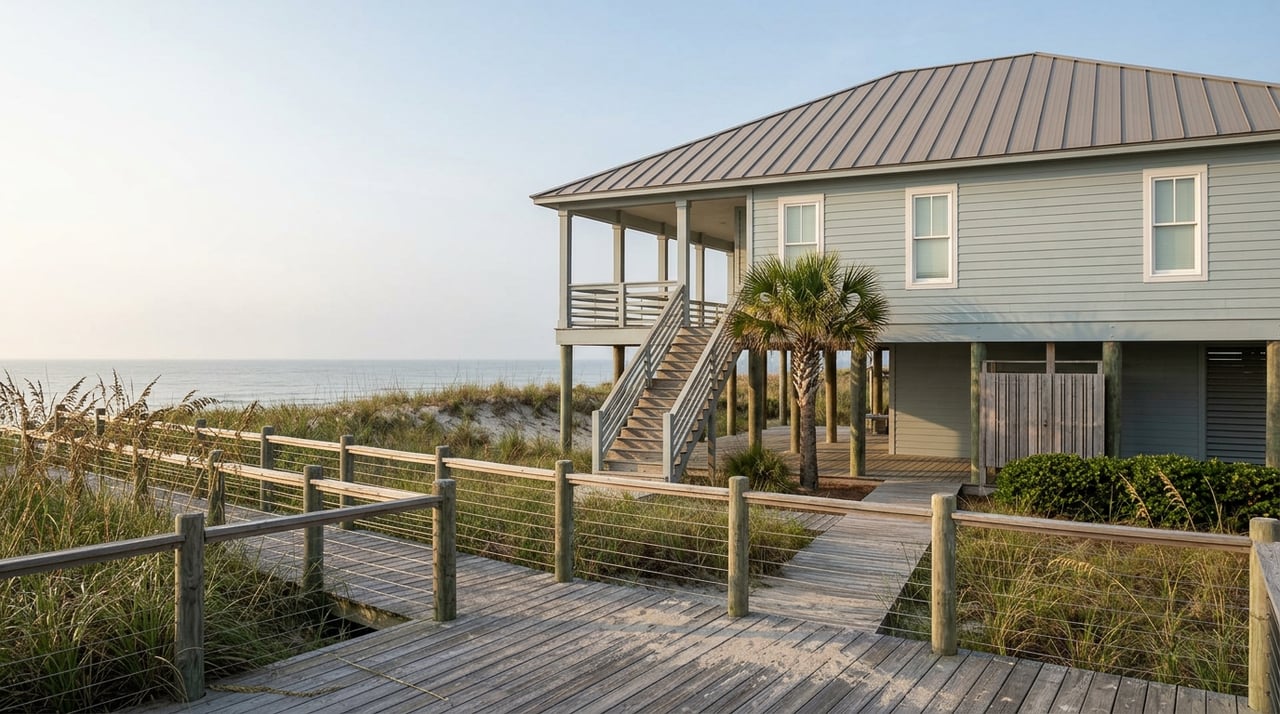
In December 2025, the Town of Oak Island issued a CAMA minor permit for a 0.17-acre lot at 5515 East Beach Drive, clearing the way for a 2,856-square-foot house. Town officials said they have no record of when a home last stood on that specific parcel. As Coastal Review reported, aerial images from Brunswick County reveal more houses along this stretch of oceanfront in 1989 than exist there today, with most of what had been there gone by 2003, taken by storms and years of erosion. Only two of the oceanfront lots on that block still hold houses.
By the time the permit was issued, neighbors near SE 58th Street and East Beach Drive had already been organizing for months. According to Coastal Review, a petition against building on lots like this one had passed 600 signatures by June 2025; WECT reported that it topped 700 the following month. Dean and Amber Russell, residents who led the pushback, worried a single approval would set a precedent. As WECT reported, Dean Russell said, "If this one gets up, it's just gonna create a domino effect." The town's answer to why a long-vacant lot had suddenly become buildable was straightforward: there is no standing designation that marks an oceanfront lot as permanently buildable or unbuildable. Each application is judged against the rules in effect the day it's filed, and the beach itself is one of the inputs.
That last part is the piece most buyers miss. On Oak Island, the line that determines whether an oceanfront parcel can hold a house isn't fixed to the property. It's fixed to the sand, and that boundary can shift when the beach is nourished.
Oak Island's CAMA (Coastal Area Management Act) page says the oceanfront setback rule requires new construction to sit at least 60 feet landward of whichever line is more restrictive: the pre-project vegetation line, or the current line of stable natural vegetation at the time a permit is filed. The town's Development Line page says that before an owner or builder can even ask whether a lot is buildable, a licensed surveyor has to locate that vegetation line, known locally as the FLOV, and plot it against the 60-foot setback, the town's official Development Line, the 1998 static vegetation line, and the federal mean high water line from 2000. Only after that survey goes to the town's CAMA Local Permitting Officer does anyone get a real answer.
The rule got more conservative in 2022. That July, North Carolina's Coastal Resources Commission adopted new regulations repealing the "Development Line," a more flexible reference point some coastal towns had been using, and the changes took effect that August. Oak Island reverted to measuring from the older, stricter pre-project vegetation line. The buildable envelope on a number of oceanfront lots shrank, through no action by the owner and no change to the lot itself. The rule is applied at the state level and enforced through the town's local permitting program, so it moves the same way for every oceanfront owner on the island at once.
What the 2022 change didn't do was make the line static going forward. It's still measured against real, growing vegetation, and vegetation responds to how much sand is on the beach.
Oak Island finished a beach nourishment project this past winter that placed roughly a million cubic yards of sand along the town's oceanfront, reported at a cost of about $33 million. Work started in November 2025, and by mid-January 2026 crews had pushed sand placement past the OKI Pier and Pier House, with full completion expected in early February. Town Council approved an additional 114,000 cubic yards beyond the original contract, funded partly through a $3 million Coastal Storm Damage Mitigation Grant, specifically to widen the buffer in stretches that had eroded worst.
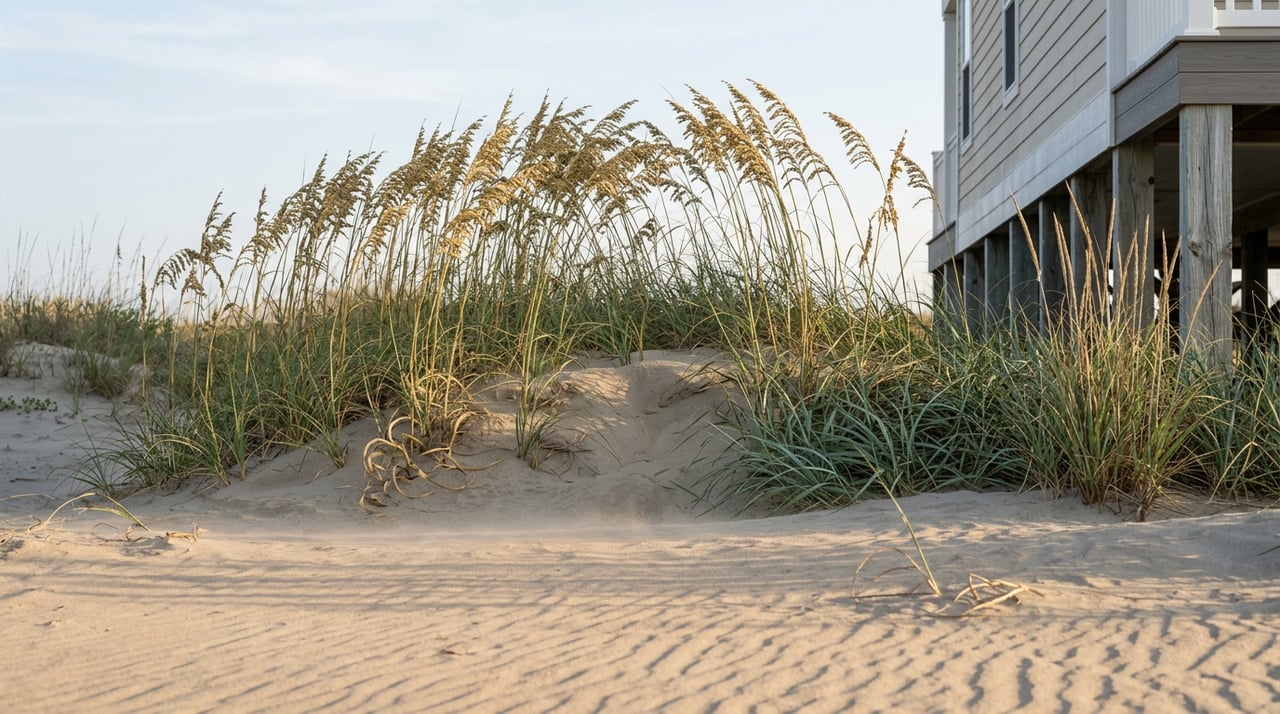
Fresh sand grows fresh vegetation, and fresh vegetation is exactly what a FLOV survey measures. A lot that read as unbuildable in 2023, because the vegetation line sat too close to where a house would need to go, can read differently in 2026 once a nourishment project has pushed that line seaward. That's the mechanism behind the East Beach Drive permit. As WECT reported, renourishment has "seemingly made some plots of land viable to build on once again." The sand didn't just protect the beach. It redrew the boundary that decides what can be built on it.
As Coastal Review reported, one resident who lives near a still-vacant stretch of oceanfront lots described the pattern bluntly: "We've seen this dune go away three times in 12 years." The dune protecting a lot today is not a permanent feature. It's the current state of a system that gets rebuilt on a schedule, and every rebuild resets the measurement.
This isn't only a story about vacant lots. An existing home on an oceanfront parcel can lose its grandfathered status too. Oak Island's Flood Information page describes the substantial improvement rule: once the cost of reconstruction, remodeling, additions, or other improvements reaches 50 percent or more of a structure's value before it was altered, the whole building must be brought up to the town's current building and floodplain ordinance requirements. For a home sitting inside today's tighter setback line, that can turn a straightforward remodel into a much bigger project, since bringing the structure fully current may raise placement and elevation questions that didn't exist when the house was first built.
None of this replaces a licensed surveyor or the town's own permitting review, and it isn't legal advice. It's the sequence of questions that keeps a buyer from finding out about a setback problem during a renovation instead of during due diligence.
Oak Island is one of only five coastal towns in the state with a Coastal Resources Commission-approved beach management plan, alongside Ocean Isle Beach, Carolina Beach, Kure Beach, and Wrightsville Beach. That approval came with an obligation: the town's plan calls for placing an estimated 16.2 million cubic yards of sand over the next three decades, on a repeating six-year renourishment cycle. Every cycle rebuilds the dune, regrows the vegetation, and gives surveyors a new line to measure from.
That means the East Beach Drive situation isn't a one-off. It's what happens, on a schedule, every time the town completes another round of nourishment. A lot that looks unbuildable this year may not stay that way, and a lot that looks safely buildable today could tighten again the next time the Coastal Resources Commission adjusts how the reference line is measured. For anyone shopping oceanfront on Oak Island, or planning to eventually renovate or rebuild one, the smart move is treating the setback line as a variable to check at the point of decision, not a fact to assume from the last time someone looked.
Can I find out if an oceanfront lot is buildable before I make an offer? Yes, through a FLOV survey submitted to the town's CAMA Local Permitting Officer, though the results only reflect conditions on the day the survey was completed
Does a CAMA permit guarantee my neighbors can't object? No. Permits are reviewed against state and local regulations, but neighboring property owners can and do file objections, request hearings before the Coastal Resources Commission, and pursue legal counsel. WECT reported on the East Beach Drive dispute.
If beach nourishment moves the setback line seaward, does that increase my property's value? Not automatically. A wider buildable envelope can support a larger structure.
If you're weighing an oceanfront purchase on Oak Island, or you already own one and are trying to figure out what a renovation or rebuild would actually require, Better Beach Sales works this coastline every day, alongside the setback surveys, the permitting officers, and the nourishment schedule that comes with it. Schedule a Consultation — Experience Oak Island.
Stay up to date on the latest real estate trends.
Imagine a place where work and play seamlessly blend into one fulfilling lifestyle. Our approach at Better Beach Sales goes beyond finding you the perfect home—it’s about building a community that thrives on collaboration and the natural beauty of Oak Island. Together, we can create opportunities, share success, and truly enjoy all that our coastal haven has to offer.